Managing dental billing across multiple locations requires more than submitting insurance
claims and posting payments. For Dental Support Organizations (DSOs), maintaining consistent
Billing processes across practices is essential for improving operational efficiency, tracking
outstanding revenue, and supporting long-term growth.
As dental groups expand, differences in insurance verification, claims management, payment
posting, and accounts receivable follow-up can create challenges.
Multi-location dental billing requires a structured approach that helps every practice follow
consistent revenue cycle management procedures.
This illustrative case study explores how centralized dental billing can address common
challenges for growing DSOs and multi-location dental practices.
The Challenge: Inconsistent Dental Billing Across Multiple
Locations
Consider a growing DSO managing five dental practices across different locations.
Each practice operates independently, with its own administrative team responsible for
insurance verification, claim submission, payment posting, and insurance follow-ups.
As the organization expands, leadership begins noticing inconsistencies in billing operations.
Common DSO Dental Billing Challenges
1- Inconsistent Insurance Verification – Different locations follow different procedures for checking patient eligibility, coverage limitations, deductibles, and annual maximums.
2- Delayed Dental Claim Submissions – Incomplete documentation and inconsistent billing workflows cause some claims to remain unsubmitted longer than expected.
3 – Increasing Insurance Accounts Receivable – Outstanding claims accumulate when payer follow-ups are not consistently prioritized.
4 – Payment Posting Differences – Locations use different methods for recording insurance payments, adjustments, and outstanding balances.
5 – Limited Revenue Cycle Visibility – DSO leadership struggles to compare billing performance because reporting procedures differ between locations.
These challenges demonstrate why growing dental organizations need consistent dental revenue cycle management processes.
The Solution: Centralized Dental Billing for Multi-Location Practices
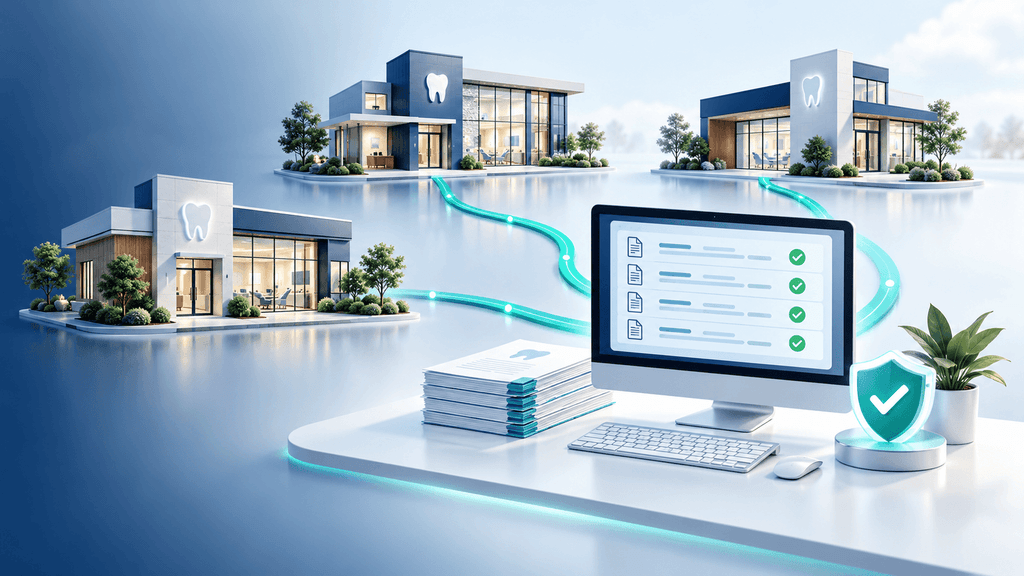
A centralized dental billing approach can help DSOs establish consistent processes across participating practices. Instead of allowing each location to follow separate billing procedures, the organization can introduce shared standards for insurance verification, claims management, accounts receivable, and reporting.
1-Standardizing Dental Insurance Verification
A consistent dental insurance verification process helps dental practices review important insurance information before treatment.
This includes:
- Confirming active insurance eligibility.
- Reviewing annual maximums and deductibles.
- Checking treatment-specific coverage limitations.
- Identifying waiting periods and exclusions.
- Documenting verification findings.
Standardized insurance verification supports clearer communication between dental offices and billing teams.
2. Improving Dental Claims Management
Dental claims management is an important part of DSO revenue cycle management.
A standardized process helps billing teams review claims for missing information before submission.
Key activities include checking procedure codes, required documentation, insurance details, and supporting attachments. Consistent claim review procedures can help reduce avoidable errors and improve billing coordination across locations.
3. Strengthening Dental Accounts Receivable Management
Dental accounts receivable management becomes more complex when a DSO operates multiple practices.
A centralized A/R workflow can help teams:
- Monitor outstanding insurance claims.
- Review claims aged over 30, 60, and 90 days.
- Prioritize payer follow-ups.
- Investigate unresolved claim denials.
- Track actions taken on outstanding balances.
This approach gives dental organizations a more organized way to manage insurance receivables.
4. Creating Consistent Payment Posting Procedures
Accurate dental payment posting helps dental practices maintain reliable financial records.
Standardized procedures can help ensure insurance payments, contractual adjustments, denials, and patient balances are recorded consistently. This also makes it easier to identify discrepancies and review billing activity across locations.
5. Improving DSO Revenue Cycle Reporting
Centralized reporting allows DSO leadership to monitor important revenue cycle indicators.
Instead of reviewing disconnected reports from individual practices, leadership can compare performance using consistent metrics. These may include claim submission turnaround time, denial rates, insurance A/R aging, and payment posting activity.
Expected Outcomes: Better Multi-Location Dental Billing Operations
When a DSO implements standardized billing procedures, it can work toward several operational improvements.
More Consistent Billing Workflows
Participating dental practices follow shared procedures for insurance verification, claims submission, and payer follow-up.
Improved Insurance A/R Visibility
Billing teams and organizational leadership can monitor outstanding claims using consistent reporting methods.
Better Administrative Coordination
Clearly defined responsibilities help local office teams and centralized billing staff communicate more effectively.
More Reliable Revenue Cycle Reporting
Consistent performance indicators make it easier to compare billing operations across locations.
Greater Operational Scalability
Established billing procedures can help dental organizations incorporate additional locations as they expand.
These are potential outcomes of centralized billing, not verified results from a specific DentDesk client.
Why Centralized Dental Billing Matters for Growing DSOs
As a Dental Support Organization expands, maintaining consistent administrative processes becomes increasingly important.
Centralized dental billing services can help organizations coordinate billing activities, establish shared procedures, and improve visibility into revenue cycle performance.
However, centralized billing does not mean every practice must operate identically.
Differences in payer contracts, state requirements, practice management systems, and clinical workflows may require location-specific procedures. The goal is to create consistent standards while accommodating legitimate operational differences.
Why Choose DentDesk for DSO Dental Billing Services?
DentDesk Billing Solutions provides dental billing services and revenue cycle management support for dental practices and growing dental organizations.
Our services include:
Dental Insurance Verification: Support for reviewing eligibility, benefits, and relevant insurance information.
Dental Claims Management: Assistance with claim preparation, submission workflows, and follow-up.
Insurance A/R Management: Support for tracking outstanding claims and coordinating payer follow-ups.
Dental Payment Posting: Assistance with recording insurance payments, adjustments, and related billing information.
Dental Credentialing: Administrative support for provider credentialing and enrollment processes.
For multi-location dental organizations, having clear billing procedures and coordinated support can help create more organized revenue cycle operations.
Key Takeaways for Multi-Location Dental Practices
Growing dental organizations should regularly evaluate whether their billing procedures are consistent across locations.
Standardized insurance verification, claims management, accounts receivable follow-up, payment posting, and reporting can help reduce operational inconsistencies.
Centralized dental revenue cycle management also supports clearer communication between practice teams and organizational leadership.
By monitoring relevant performance metrics, DSOs can identify billing challenges and make informed decisions about process improvements.
Frequently Asked Questions About DSO Dental Billing
What is DSO dental billing?
DSO dental billing refers to the management of billing and revenue cycle activities for dental practices operating within a Dental Support Organization.
What are the biggest billing challenges for multi-location dental practices?
Common challenges include inconsistent insurance verification, delayed claim submissions, outstanding insurance balances, payment posting discrepancies, and limited reporting visibility.
How does centralized dental billing help DSOs?
Centralized dental billing can help DSOs standardize administrative workflows, coordinate insurance follow-ups, and monitor revenue cycle performance across multiple locations.
Can DSOs outsource dental billing services?
Yes. Dental Support Organizations can use outsourced dental billing services for selected billing and revenue cycle management activities based on their operational requirements.
How can DSOs improve dental accounts receivable management?
DSOs can improve insurance A/R management by consistently monitoring aging claims, prioritizing follow-ups, documenting payer responses, and reviewing unresolved balances.
Why is revenue cycle reporting important for dental groups?
Revenue cycle reporting helps dental groups evaluate billing performance, identify outstanding claims, monitor denial trends, and compare operational results across locations.
Improve Multi-Location Dental Billing With DentDesk
Managing dental billing across multiple locations requires consistent workflows, organized insurance follow-ups, and reliable revenue cycle reporting.
Whether your dental organization is managing existing practices or preparing for expansion, having structured billing processes can help support more efficient operations.
Looking for DSO dental billing services for your growing organization?
Connect with DentDesk Billing Solutions to explore dental billing and revenue cycle management services for multi-location dental practices.
Contact DentDesk Billing Solutions Today.

No responses yet