Introduction
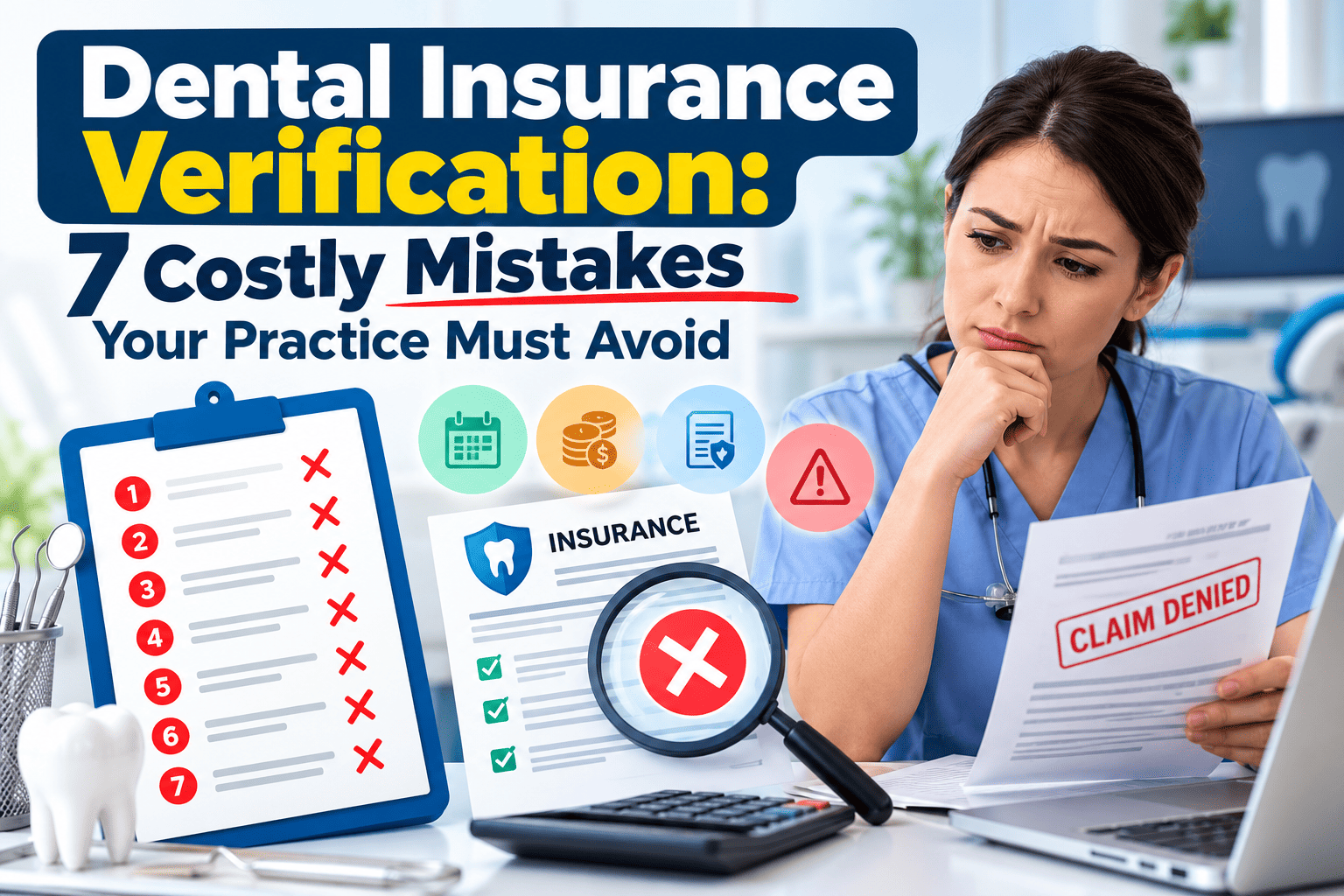
A single insurance verification mistake can turn a successful dental appointment into a billing headache. From denied claims to unexpected patient balances, incomplete insurance information can affect your practice’s revenue and patient satisfaction.
Dental insurance verification goes beyond confirming active coverage. It involves checking benefits, deductibles, frequency limitations, and payer-specific requirements before treatment begins.
Are small verification errors silently affecting your dental practice’s cash flow? Let’s explore seven common mistakes and how to prevent them.
Why Dental Insurance Verification Matters for Your Practice
Accurate dental insurance verification plays an important role in maintaining a healthy revenue cycle. When insurance details are overlooked, dental practices may experience delayed reimbursements, claim denials, and unexpected patient billing issues.
A consistent verification process helps your team identify potential coverage problems early, provide more informed treatment estimates, and reduce unnecessary administrative work.
7 Common Dental Insurance Verification Mistakes to Avoid
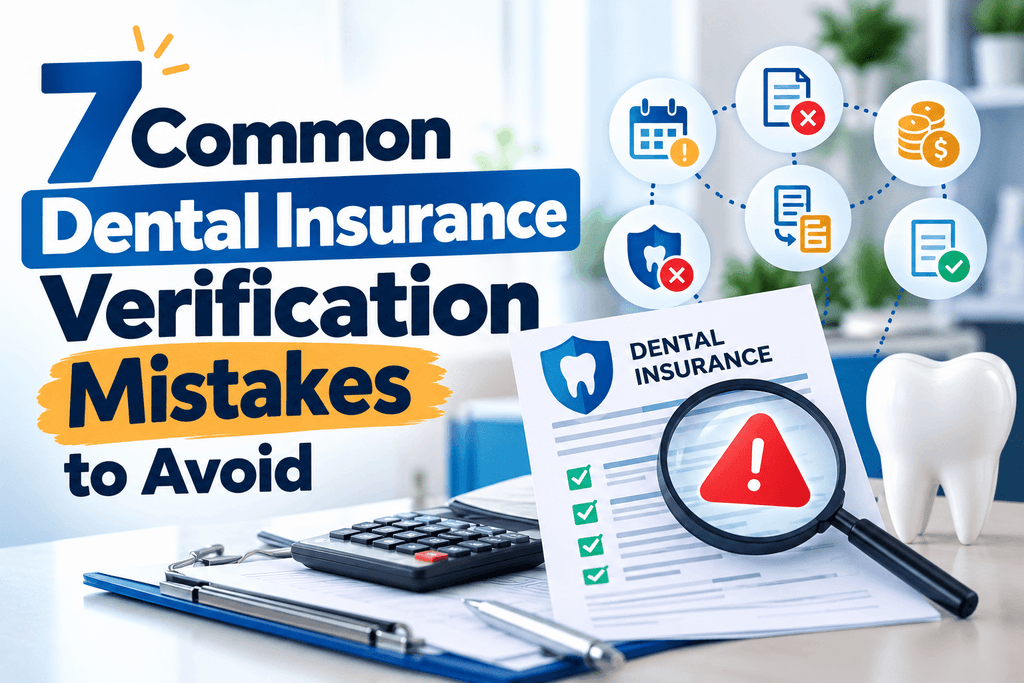
Even experienced dental teams can miss important insurance details when managing busy schedules. Understanding these common mistakes can help your practice strengthen its verification process and reduce preventable billing complications.
1. Checking Eligibility Without Verifying Benefits
Active insurance doesn’t guarantee coverage for every dental procedure. A patient may have an active policy, but certain treatments could have exclusions, waiting periods, or limited benefits.
How to Avoid It: Verify procedure-specific benefits, coverage percentages, exclusions, and limitations before treatment.
2. Overlooking Frequency Limitations
Dental insurance plans often restrict how frequently cleanings, examinations, X-rays, and other procedures are covered. Missing these limitations can lead to denied claims and unexpected patient expenses.
How to Avoid It: Review treatment history, frequency restrictions, and waiting periods before scheduling procedures.
3. Ignoring Deductibles and Annual Maximums
A procedure may be covered, but the patient’s remaining annual benefits and deductible can significantly affect reimbursement. Overlooking these details may result in inaccurate treatment estimates.
How to Avoid It: Confirm the remaining annual maximum, deductible, and applicable coverage percentage before treatment.
4. Missing Coordination of Benefits (COB)
Patients with multiple dental insurance plans require proper coordination of benefits. Incorrectly identifying primary and secondary insurance can cause claim rejections, processing delays, and additional follow-ups.
How to Avoid It: Verify the correct insurance order and confirm how both plans coordinate payments.
5. Failing to Check Prior Authorization Requirements
Some dental procedures require prior authorization or predetermination. Missing these requirements can create reimbursement delays or claim denials.
How to Avoid It: Confirm authorization requirements and supporting documentation before treatment. Remember that authorization does not guarantee payment.
6. Using Outdated Insurance Information
Insurance coverage can change when patients switch employers, update policies, or change plans. Relying on previously verified information may lead to eligibility-related denials.
How to Avoid It: Recheck insurance information before upcoming appointments and update patient records whenever coverage changes.
7. Not Documenting Verification Details
Incomplete verification records can make insurance follow-ups more difficult. Missing reference numbers, coverage information, or verification dates may create unnecessary administrative work.
How to Avoid It: Maintain accurate records of eligibility, benefits, limitations, verification dates, and payer reference numbers.
How Insurance Verification Mistakes Affect Dental Revenue
Insurance verification errors can create challenges throughout the dental revenue cycle. What starts as a small oversight may lead to claim corrections, payment delays, and additional work for your billing team.
Common consequences include:
- Claim Denials: Missing or incorrect insurance information can cause preventable denials.
- Delayed Payments: Claim corrections and payer follow-ups can slow reimbursement.
- Unexpected Patient Bills: Inaccurate benefit estimates can create financial surprises.
- Increased Administrative Work: Staff spend additional time resolving insurance discrepancies.
- Patient Dissatisfaction: Billing confusion can negatively affect the patient experience.
Identifying insurance issues before treatment can help dental practices improve billing accuracy and reduce avoidable complications.
How DentDesk Billing Solutions Supports Dental Insurance Verification
Managing dental insurance verification can be time-consuming, especially when your front desk is handling patient calls, scheduling, and daily administrative responsibilities.
DentDesk Billing Solutions provides professional dental insurance verification services to help dental practices streamline eligibility checks, review insurance benefits, and manage verification-related administrative tasks.
Our support helps dental practices:
- Verify patient insurance eligibility and benefits.
- Identify coverage limitations and exclusions.
- Review deductibles and annual maximums.
- Reduce repetitive administrative workloads.
- Support more accurate patient financial estimates.
With dedicated insurance verification support, your team can spend less time managing administrative tasks and more time focusing on patient care.
Frequently Asked Questions About Dental Insurance Verification
What Is Dental Insurance Verification?
Dental insurance verification is the process of confirming a patient’s insurance eligibility and reviewing benefits, deductibles, coverage limitations, and other plan requirements before treatment.
Why Is Dental Insurance Verification Important?
It helps dental practices identify coverage issues, reduce avoidable claim denials, improve financial estimates, and maintain efficient billing workflows.
Can Dental Insurance Verification Prevent Claim Denials?
Dental insurance verification can help prevent certain eligibility-related and benefit-related denials. However, reimbursement also depends on accurate coding, documentation, and payer policies.
Can Dental Practices Outsource Insurance Verification?
Yes. Dental practices can outsource insurance verification tasks to service providers like DentDesk Billing Solutions to help reduce administrative workloads and improve verification efficiency.
Final Thoughts: Better Verification, Fewer Billing Surprises
Dental insurance verification is more than an administrative task—it’s an important part of protecting your practice’s revenue and improving patient financial communication.
By identifying coverage limitations, confirming benefits, and maintaining accurate records, dental practices can reduce avoidable errors and create smoother billing workflows.
The key is simple: Verify early, document accurately, and prevent billing surprises before they happen.
Simplify Dental Insurance Verification With DentDesk Billing Solutions
Let DentDesk Billing Solutions help your practice streamline insurance verification, reduce administrative challenges, and support a healthier revenue cycle.
Spend less time managing insurance details and more time caring for your patients.
📞 Call: (917) 781-2005
📧 Email: Reachus@dentdeskbillingsolutions.com

No responses yet